
- All
- Product Name
- Product Keyword
- Product Model
- Product Summary
- Product Description
- Multi Field Search
Views: 0 Author: Site Editor Publish Time: 2026-11-04 Origin: Site


Choose a garment cover material by how the garment will be stored, displayed or carried. A lightweight nonwoven cover is a practical starting point for everyday dust protection and boutique handoffs. A washable cotton cover is worth considering for longer-term indoor storage, while a more robust woven shell can suit garments that move frequently between locations. Clear film helps teams identify stock quickly during short transfers. In each case, the zipper, hanger opening, shoulder width and gusset help determine how useful the cover will be. Test those features with the bulkiest garment you intend to pack.
Start with the longest or most demanding part of the garment's journey. In a dry stockroom, a cover mostly needs to limit dust and allow easy access. In a wardrobe, storage conditions and contact with delicate fabric matter more. For frequent transport, repeated folding, abrasion and carry points deserve more attention than the feel of a small fabric swatch.
Material or construction | Suitable starting use | What to check |
|---|---|---|
Lightweight nonwoven | Boutique storage, suit pickup and routine dust protection | Opacity, seam integrity, zipper and hanger opening |
Washable cotton or cotton muslin | Dry indoor storage where a fabric cover is preferred | Color transfer, shrinkage, lint and laundering instructions |
Woven nylon or polyester | Frequent transport and repeated use | Shell abrasion, seam reinforcement, folding points and handle anchors |
Clear film | Short transfers and visual stock identification | Puncture at hanger ends, closure, intended duration and storage conditions |
Fabric shell with clear window | Repeat handling with quick identification | Window position, attachment and care compatibility |
Nonwoven describes how the sheet is constructed. Ask which fiber is used, whether there is a coating or laminate and which surface touches the garment. Two nonwoven garment covers can feel quite different once fitted over a hanger. A soft one may drape cleanly over a jacket. A stiffer one may hold its own shape, which can be useful if the stockroom team handles covers rapidly and needs the opening to stay accessible.
Cotton is worth evaluating when the cover will be cleaned and reused. Check the finished item after the proposed wash method. A short cover can become unusable if the length changes and the garment hem starts touching the bottom seam. For sensitive or historic garments, storage methods depend on the textile's condition and weight. Heavy or structurally weak pieces may need flat support rather than routine hanging.
Clear film is useful when staff need to read a garment tag or see its color without opening every cover. Think about how long that identification is needed. A window or exterior label pocket can provide the same operational benefit in a reusable fabric cover and leaves more options for the main shell.
Choose the cover's usable dimensions from the garment as it will actually hang. Record the hanger width, shoulder-to-hem drop and the thickness of the garment on that hanger. Add enough room for the user to move the garment past the zipper without scraping details or folding the shoulders.
For a suit, load the jacket, trousers and the same hanger the store will hand to the customer. The trousers can change the thickness and balance even if the jacket fits by itself. Watch the sleeve heads as the zipper closes. A flat cover that makes the shoulders bend inward is a poor fit even when the hem clears the bottom.
For bridalwear, outerwear or garments with a full skirt, try a deeper gusset and a longer opening. Pay attention to where the garment has its volume. A cover with a wide lower section can still pinch a structured shoulder or a sleeve. Check that the hem hangs clear, then close and carry the loaded cover. Look for bunching where the weight settles after a short walk.
Include the hook opening in your measurement. Staff should be able to slide the intended hanger through without stretching the seam excessively. With the hook in place, check how much of a gap remains above the garment. If hangers vary between the factory, stockroom and store, test the largest hook and widest shoulder your operation uses.
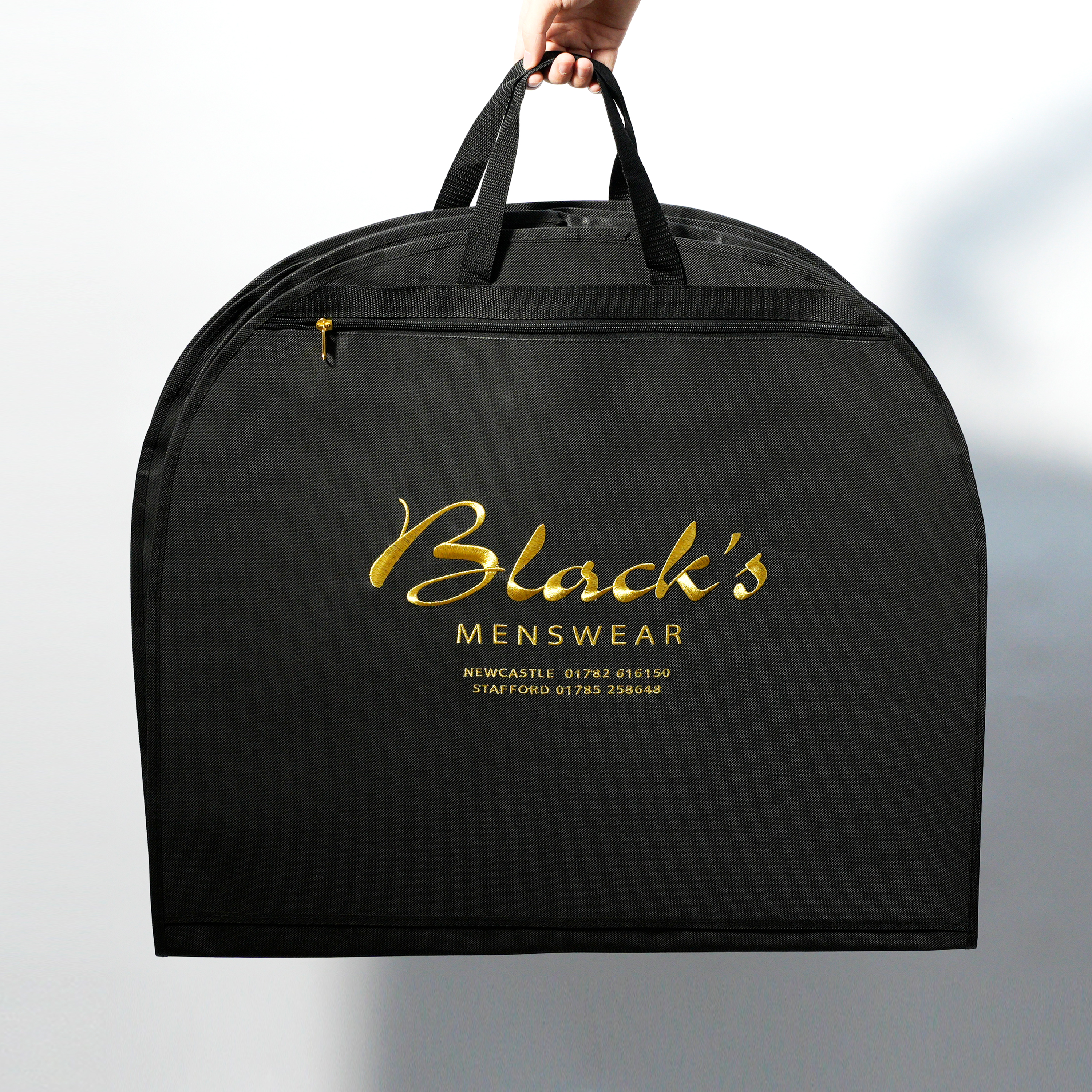
The finished cover's weak points usually become visible around openings and load-bearing seams. Open and close the zipper with a garment inside. Check whether the pull catches the shell or rubs against the garment. If embellishments or delicate fabric sit near the closure, consider a zipper guard and verify its position on a sample.
The nonwoven dustproof suit bag uses a nylon nonwoven shell and zipper closure. Its lightweight construction provides a reference for buyers comparing dust covers for suits. Check the usable dimensions against your hanger and the garment set you need to carry. A dust cover helps shield a garment during storage and handling. The performance of the complete cover still depends on the fit and on openings around the hook, zipper and seams.
If the cover has handles or a carry loop, load it and lift it as the recipient would. Look for stretching at the stitch line and twisting where the handle meets the panel. A cover can look tidy while hanging and distort when carried folded. If the product is routinely used that way, check the fold with the hanger, garment and any accessories loaded.
For branding, inspect the reverse side of printed areas when they could touch light fabric. Ask for the proposed ink and substrate to be sampled together. Rub against a clean test cloth under normal handling conditions and inspect the interior for rough stitching, printing transfer or lint.
Give each cover a defined job so the team can select it consistently. A stockroom cover may prioritize visibility and smooth access, while a boutique handoff may call for a clean exterior and carrying handles. A garment shipped folded needs protection against compression and movement in the parcel. A hanging cover can be an inner layer if it fits the packing method and the garment can tolerate the fold.
For recurring apparel shipments, test the packed garment after it has been folded, stacked and unpacked. Keep tags, hooks and zipper pulls away from areas where they can leave an impression. Printed apparel boxes are a separate format for folded garments. Evaluate internal dimensions and stacking with the actual garment, any tissue and the outer shipping pack.
Set up a clear material and size naming convention for the stockroom. For example, staff can distinguish a short nonwoven suit cover from a long gusseted occasionwear cover by an exterior label or a standard storage location. The person packing should be able to choose quickly, and the recipient should be able to remove the cover without disturbing garment details.
Review a prototype from the garment cover range or a custom sample with the people who will use it. Include a store associate and someone from fulfillment if the product passes through both teams. Have them load, close, hang, carry and remove the same garment. Record the specific action where any resistance or deformation first appears.
Use the largest garment and actual hanger for each planned size. Check the shoulders, zipper path and hem.
Identify the shell fiber, any coating, zipper type, usable length and gusset depth on the approved specification.
Inspect seams from the inside. Check exposed thread ends, rough contact points and the area around the hanger hook.
Repeat normal opening, carrying and folding, then compare the sample with its original shape and appearance.
If laundering or wipe cleaning is required, follow the proposed care method and retest the fit, closure and printed areas.
A lightweight nonwoven garment cover is a sound starting point for dry stockrooms and suit handoffs. Cotton can suit longer indoor storage where a washable fabric cover is useful, while repeated travel puts more emphasis on shell wear, handles and reinforced seams. Xiamen Shengge Packaging Products Co., Ltd. manufactures nonwoven packaging alongside paper bags and boxes. For a repeat order, approve the full cover with the working hanger and the largest garment it must hold. That sample gives purchasing and fulfillment a common reference for fit, closure and everyday handling.
The term nonwoven describes construction and does not establish water resistance. A coating or laminate may change the behavior of the shell. For wet exposure, check the finished cover's seams, zipper, hanger opening and the supplier's intended-use guidance.
Look for a clean lining or contact surface with documented colorfastness for the intended conditions. Check dark binding, printed areas and the zipper tape with a white test cloth. Keep the sample dry and review it after the planned cleaning method.
It can make it easier to load a dress or coat without dragging it through a small opening. Check whether the zipper path crosses any beading or delicate surface and whether staff can close it with the garment on the hanger.
Allow the garment to dry under conditions appropriate to the textile before closing the cover for storage. Check the sleeves, lining and thick seams, where moisture may linger longer.
A long cover can hold a short jacket if the shoulders fit, but the excess length can be awkward at a crowded rail or during pickup. Trial two sizes if the shorter garments make up a large share of daily handling.


