
- All
- Product Name
- Product Keyword
- Product Model
- Product Summary
- Product Description
- Multi Field Search
Views: 0 Author: Site Editor Publish Time: 2026-09-08 Origin: Site


Backroom storage space remains a premium commodity for modern brick-and-mortar stores and bustling fulfillment centers. Every square inch counts when managing fast-moving retail operations and organizing back-of-house inventory. A frustrating conflict often arises between marketing ambitions and warehouse realities. Brands demand premium packaging to impress customers, but rigid or poorly designed bags eat up valuable inventory footprints. This excessive bulkiness severely limits room for actual saleable goods and strains facility logistics.
You need a reliable strategy to balance brand aesthetics with warehouse efficiency. In this guide, we will explore how to thoroughly evaluate specific structural designs, folding mechanisms, and material choices before placing a bulk order. You will learn actionable ways to optimize your packaging designs for tight spaces without ever sacrificing visual impact or quality. Careful planning transforms your packaging from a storage burden into a streamlined operational asset.
Opting for specific gusset designs and folding mechanics can reduce packaging storage footprint by up to 60%.
Handle style directly impacts stackability; die-cut and flat-paper handles nest better than twisted rope or ribbon.
Material selection dictates compressibility—standard and kraft materials offer maximum efficiency, while heavier cardboard requires precision scoring.
Vendor evaluation should heavily weight "stacking integrity" and just-in-time (JIT) fulfillment capabilities alongside print quality.
Retail storage spaces shrink every year as brands maximize their front-of-house displays. Floor space generates revenue, but backroom storage does not. Storing bulky packaging creates significant hidden costs for any business. Retailers often pay exorbitant rates per square foot in premium shopping districts. Similarly, third-party logistics (3PL) providers charge directly by pallet volume or cubic footage. A poorly designed, bulky bag inflates these overhead costs rapidly. If a standard pallet holds only 500 rigid bags compared to 3,000 flat-packed bags, you lose money on every shipment.
Many business owners face a common dilemma during the design phase. They assume high-end packaging inherently requires rigid, space-consuming structures. This assumption forces an unnecessary choice between a memorable brand experience and practical logistics. You do not have to compromise between luxury and efficiency. Smart structural engineering solves this problem beautifully.
A successful commercial packaging rollout meets three strict criteria. First, it guarantees zero warping during long-term warehouse storage. Second, it allows rapid assembly at the checkout counter to keep lines moving. Third, it demands minimal shelf space in the stockroom. Meeting these exact targets keeps cashiers fast and stockrooms highly organized. Your brand stays premium while your daily operations remain lean.
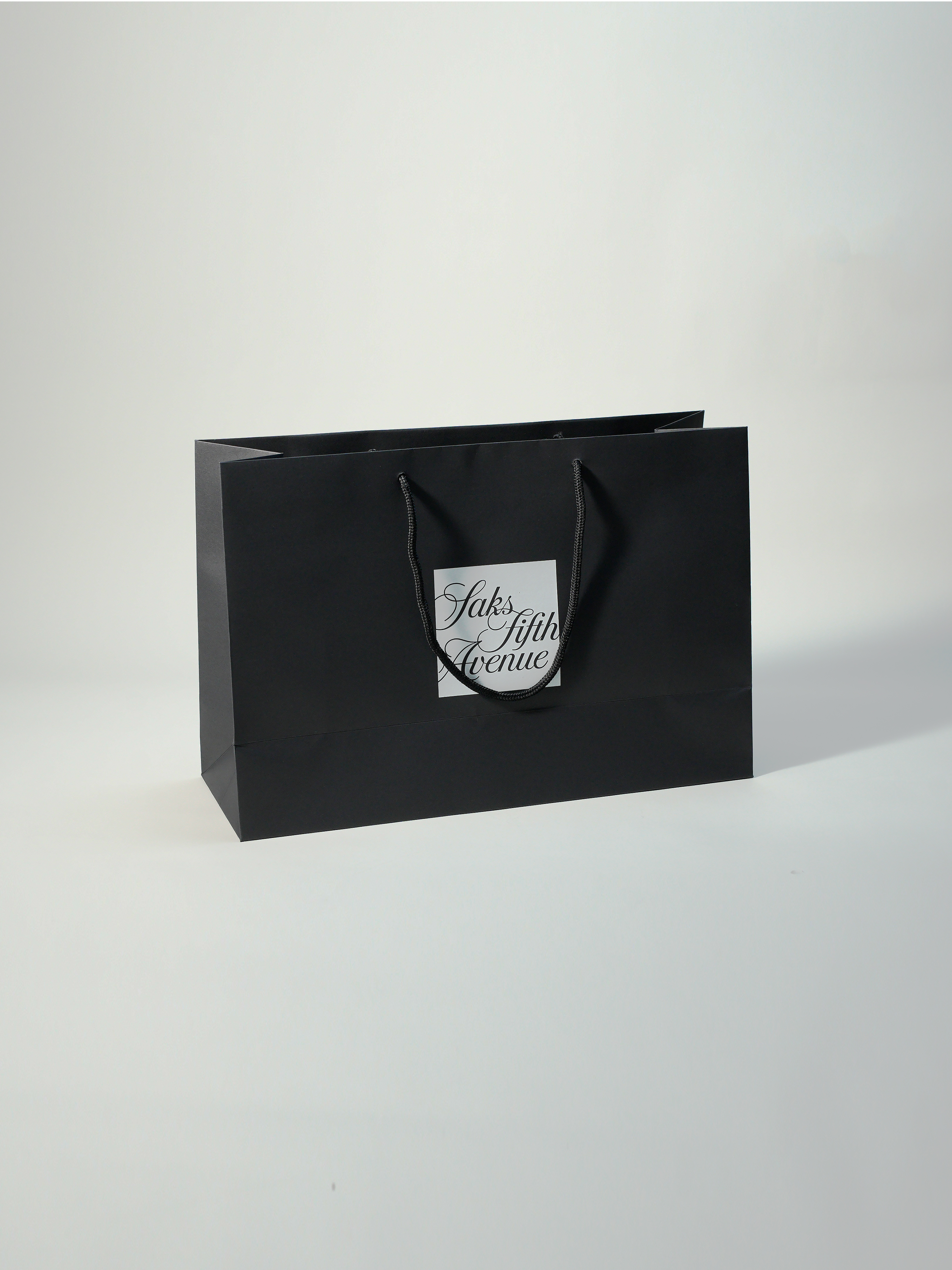
Gusset architecture plays a major role in packaging stackability. You must evaluate side-gussets against bottom-gussets carefully before finalizing a design. Side-gussets allow Custom Shopping Bags to lie perfectly flat on a table. This specific geometry reduces trapped air pockets inside master shipping cartons. Less trapped air means you fit significantly more units into a single box. Bottom-gussets often create awkward bulges when folded flat, wasting valuable vertical space.
Pre-scoring and creasing determine how well a bag folds upon arrival. Precision machine-scoring prevents unsightly cracking along the delicate paper edges. Proper, deep creases allow the material to fold completely flush against itself. This flush profile makes high-volume stacking much safer and infinitely more stable. Poorly scored bags puff up, causing tall stacks to lean and eventually topple over in the stockroom.
Next, you must consider handle integration. Handles dictate how tightly individual bags nest together inside a box.
Die-Cut Handles: These handles add zero additional volume to the silhouette. They represent the ideal choice for highly constrained spaces.
Flat Paper Handles: These fold inward easily and naturally. They stack neatly on top of one another without tangling or snagging on adjacent units.
Rope and Ribbon Handles: These options introduce significant logistical risks. They tangle easily and add unwanted, uneven bulk to every carton.
If premium ribbon or rope handles remain absolutely non-negotiable for your brand aesthetic, request inward-tucked glued variations. This simple manufacturing adjustment keeps the overall profile as slim as possible during transit.
Material thickness dictates both flexibility and storage efficiency. You must analyze the best options to find your ideal balance. High-quality kraft shopping bags deliver exceptional storage benefits for busy retailers. The standard kraft manufacturing process retains longer paper fibers. These longer fibers boast high tensile strength. They remain lightweight and highly compressible under pressure. The natural fibers retain their structural shape perfectly even after months of being folded flat.
When exploring custom paper shopping bags, monitor your GSM strictly. GSM stands for grams per square meter, measuring paper density. Choosing a 120-150 GSM paper often provides the absolute optimal balance. It offers a distinct quality feel alongside excellent flat-pack capabilities. Going thicker than 150 GSM reduces compressibility rapidly and creates rigid, stubborn folds.
Heavier materials present unique logistical challenges that require proactive solutions. Premium cardboard shopping bags require careful engineering to store efficiently. Rigid or semi-rigid cardboard resists natural folding and fights against compression. These sturdy materials need strategic hinge-points built directly into the design pattern. We highly recommend incorporating crash-lock bottoms for any cardboard variant. A crash-lock mechanism ensures they ship and store flat. It prevents the heavy material from bowing under pallet pressure. When operators pop them open, they lock instantly into a rigid shape.
Material Compressibility and Storage Matrix
Material Type | Optimal GSM Range | Compressibility Rating | Best Retail Use Case |
|---|---|---|---|
Kraft Paper | 100 - 130 GSM | Excellent | High-volume boutiques, grocery |
Standard Art Paper | 120 - 150 GSM | Very Good | Apparel, cosmetics, gifts |
Cardboard / Rigid Board | 180 - 250+ GSM | Moderate (Needs specific scoring) | Luxury goods, heavy electronics |
Storage environments pose ongoing threats to paper goods. You must anticipate these implementation risks early in your procurement process. Adhesive degradation ruins many bulk orders every single year. Cheap glues separate over time when exposed to environmental stress. This happens frequently if you store flat bags in non-climate-controlled environments. Temperatures fluctuate drastically in standard warehouses, and cheap adhesives dry out within 12 months. You must specify high-grade, temperature-resistant glues during the quoting phase.
Warping and curling present another major physical risk. Paper manufacturing inherently relies on grain direction. Improper grain alignment causes bags to warp severely. This phenomenon occurs when pallets sit under heavy compression for weeks. Always confirm the paper grain direction runs parallel to the main fold lines. This alignment keeps the structure resilient and prevents ugly distortion.
Ink transfer, commonly known as offsetting, destroys visual branding instantly. Tightly compressed storage forces printed surfaces tightly together. Summer heat and pallet pressure cause ink to bleed onto adjacent bags. You can mitigate this risk highly effectively. Require proper matte or gloss laminations on all heavy-coverage printed surfaces. Alternatively, apply a clear aqueous coating over the ink. These protective barriers lock the pigment safely in place and protect your entire inventory.
You need a reliable framework to evaluate potential packaging suppliers. Start by conducting a rigorous physical sample stress test. Ask your prospective vendor for a prototype batch of at least 50 units. Stack 50 bags perfectly on a flat table. Measure the total height of the stack. Compress the stack firmly with your hands and see how much air escapes. A poorly designed stack might measure 15 inches tall, while a highly optimized stack barely reaches 6 inches.
Next, test the critical pop-open speed. Hand a folded prototype to a cashier or staff member. Time exactly how long opening the bag takes from a flat state. Seconds matter immensely at a busy checkout register during the holiday rush.
Evaluate your inventory logistics thoroughly before ordering. Physical storage space might be entirely capped at your retail location. In these tight cases, evaluate suppliers based heavily on Just-In-Time (JIT) fulfillment capabilities. Ask them important logistical questions. Can they offer staggered shipping schedules? Will they warehouse your master bulk order and dispatch smaller monthly quantities? Split-shipment agreements save countless retail businesses from catastrophic storage disasters.
Use a strict shortlisting logic before signing any vendor contracts.
Compare proposed unit costs directly against your projected storage space savings.
Verify structural integrity through the physical 50-bag stress test.
Confirm minimum order quantities (MOQs) align closely with your actual backroom shelf capacity.
Do not purchase 10,000 units just for a price break if your stockroom only holds 2,000 units safely.
Packaging design operates fundamentally as an operational decision, not just a marketing one. A visually stunning bag fails completely if it clogs your stockroom and slows down your cashiers. You must prioritize warehouse efficiency directly alongside brand aesthetics. We strongly recommend prioritizing flat-folding mechanisms and smart handle integration.
Always test a physical prototype for stackability before moving forward. Do this rigorously before committing to a multi-thousand-unit production run. Your cashiers and warehouse teams will appreciate the streamlined workflow. A smart structural design keeps your footprint small and your brand impact massive.
Take action today to improve your packaging logistics. Audit your current packaging footprint to identify wasted air and bulk. Transition away from thick, un-scored materials if your shelf space is tight. Request a structural sample pack from your preferred supplier immediately. Evaluate the folding mechanics and material thickness firsthand to ensure a perfect fit for your backroom.
A: Flat-packed designs save an enormous amount of physical space. You can often fit five to ten times more bags in the exact same cubic footage. Rigid, un-scored bags trap large pockets of air, filling master cartons quickly. A properly gusseted, flat-folding bag eliminates this dead space entirely.
A: No, folding will not damage your logo if designed correctly. Professional suppliers use precise artwork templating during prepress. They map out the exact structural fold lines beforehand. This ensures your brand marks fall safely between the creases, keeping your logo crisp and fully visible.
A: Store your bulk inventory in a climate-controlled environment with stable humidity. Keep them far away from direct sunlight to prevent UV fading. Always leave them sealed in their original corrugated shipping boxes until needed. This outer layer prevents unwanted moisture absorption and protects the internal adhesives.


